Websites & landing pages
Responsive React and Next.js websites with clear content structure, accessible navigation and purposeful calls to action.
Frontend development
I build responsive websites and web applications with React, Next.js and TypeScript. From the first screen to the last form field, the aim is to make your product easier to use and maintain.
Who it’s for
You might have a Figma design ready to build, a product that needs a clearer interface, or an existing frontend that has become difficult to change. We can start at any of those points.
The scope
Responsive React and Next.js websites with clear content structure, accessible navigation and purposeful calls to action.
SaaS interfaces and custom web applications with thoughtful forms, tables, filters, loading states and error handling.
API-connected interfaces that explain what is happening and help users recover when a request fails. TypeScript keeps data contracts explicit.
GSAP animation where it supports the experience, plus bug fixes, responsive corrections and performance work on existing frontends.
From design to daily use
An interface is more than its ideal screenshot. Empty results, a slow connection, a long name and a keyboard-only visit all deserve attention. I plan these states alongside the main screens so the finished product is useful in real conditions.
An implementation you can explore
Devlutions uses React and Vite, reusable components, GSAP interactions and Lenis scrolling. The pages are prerendered so their content is available before React starts.
Explore the live frontend Explore the Aurel Dental design overview Optimization for an existing website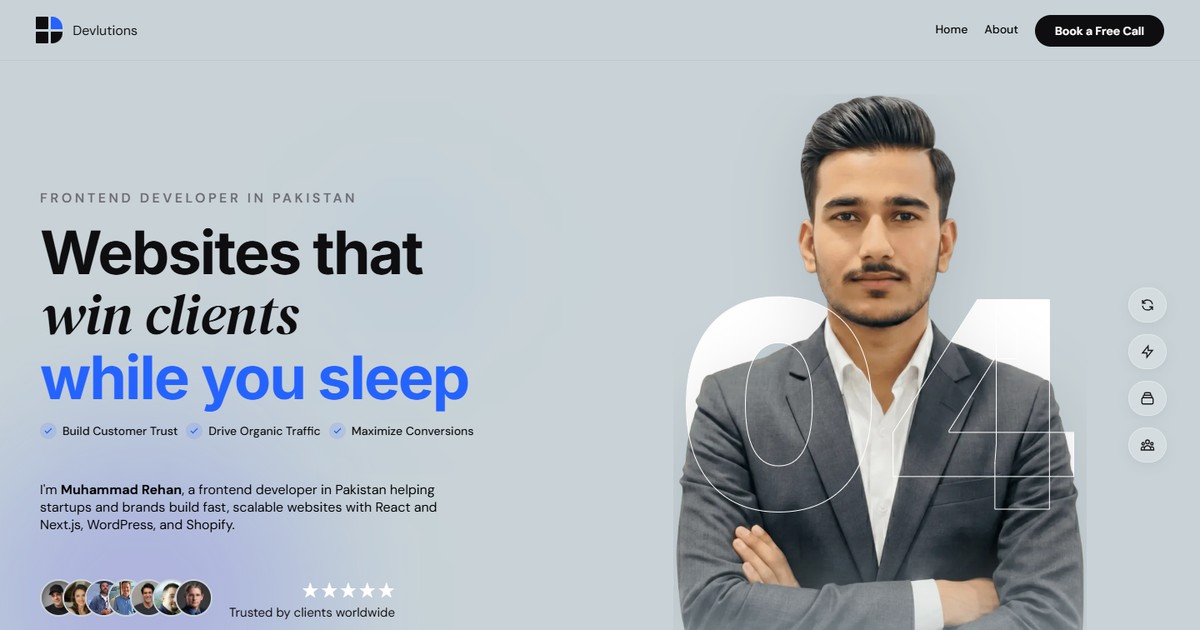
The approach
Map the key user tasks, content and integrations before choosing the component structure.
Develop the core layouts and interactions, then connect them to your data and content.
Check responsive layouts, accessibility and production behaviour; explain how the frontend is organised.
Before we begin
Yes. Share the codebase and the issue you want to solve. I start by checking the current setup, then propose focused changes that fit the existing architecture.
Yes. Share the design files, responsive expectations and any interaction notes. We will identify missing states and content requirements before development.
No, but they need a performance budget. I favour transform-based motion, avoid unnecessary startup work and support reduced-motion preferences.
Every project starts with a scope that fits the work.
How project investment worksLet’s talk about your website
Share the design, the current build or simply the problem your users need to solve.